 DexAI
DexAI01 — High-Precision Computer Vision
RailGuard AI — Railway Infrastructure Inspection & Safety Monitoring Solution
Client: Major Railway Operator
RailGuard AI is an image-recognition-based railway infrastructure inspection and safety monitoring solution for a major railway operator in Japan. Addressing aging equipment, maintenance staff shortages, and growing inspection workloads, AI-based automatic detection supports a more efficient and safer maintenance and monitoring regime — covering three areas: track equipment inspection, lineside disaster and intrusion monitoring, and overhead line and auxiliary equipment inspection.
Challenges
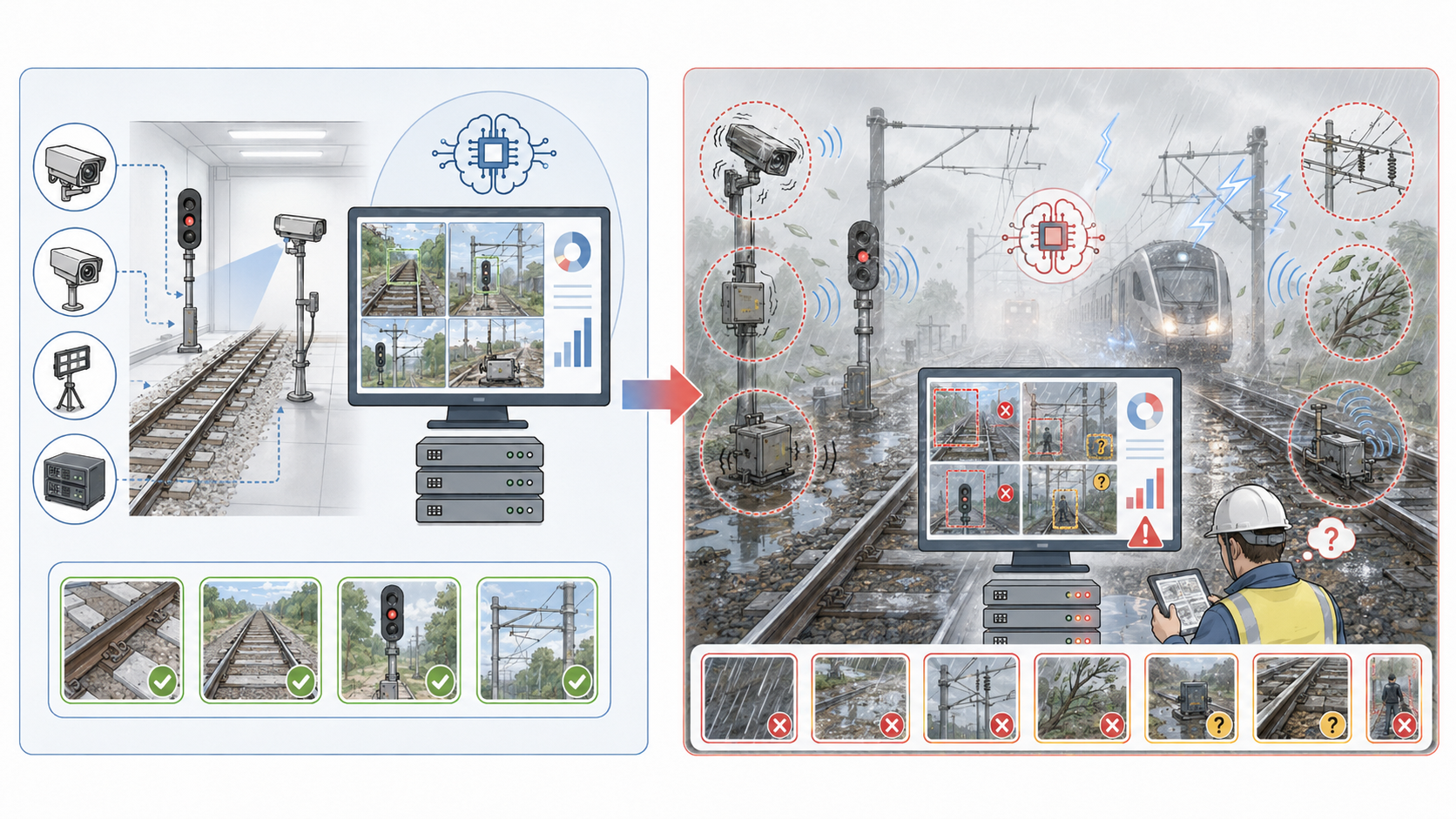
As equipment aged, maintenance staff dwindled, and inspection workloads grew, the sensors and monitoring systems already deployed in the field were not being leveraged in ways that translated into safety.
- Monitoring systems for overhead lines, disasters, and intrusions operated in silos, so data could not support integrated safety decisions during severe weather
- Sensor data was abundant, but anomaly samples were extremely scarce, limiting their use as training data
- Compound real-world noise — rain, fog, vibration, electromagnetic interference — caused frequent false positives and misses; lab accuracy did not hold in the field
- No in-house talent understood both railways and machine learning well enough to translate veteran expertise into algorithms
Approach 1: Track Equipment Inspection
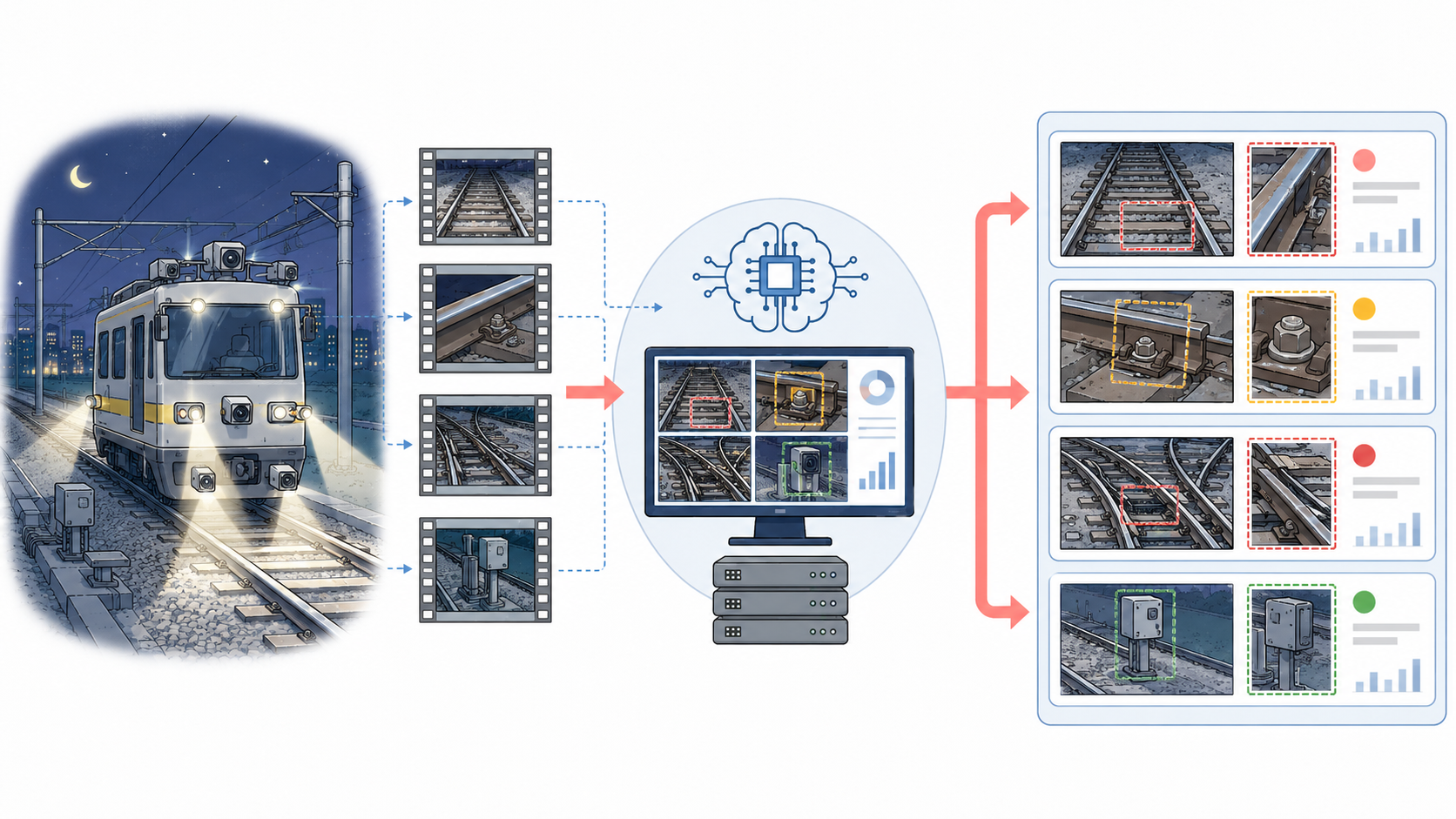
AI analyzes track imagery captured by inspection vehicles operating overnight, automatically detecting loose bolts, damaged sleepers, rail deformation, and more. This streamlines the massive image-review workload that staff previously handled by eye, enabling early anomaly detection and higher inspection quality.
Approach 2: Lineside Disaster & Intrusion Monitoring
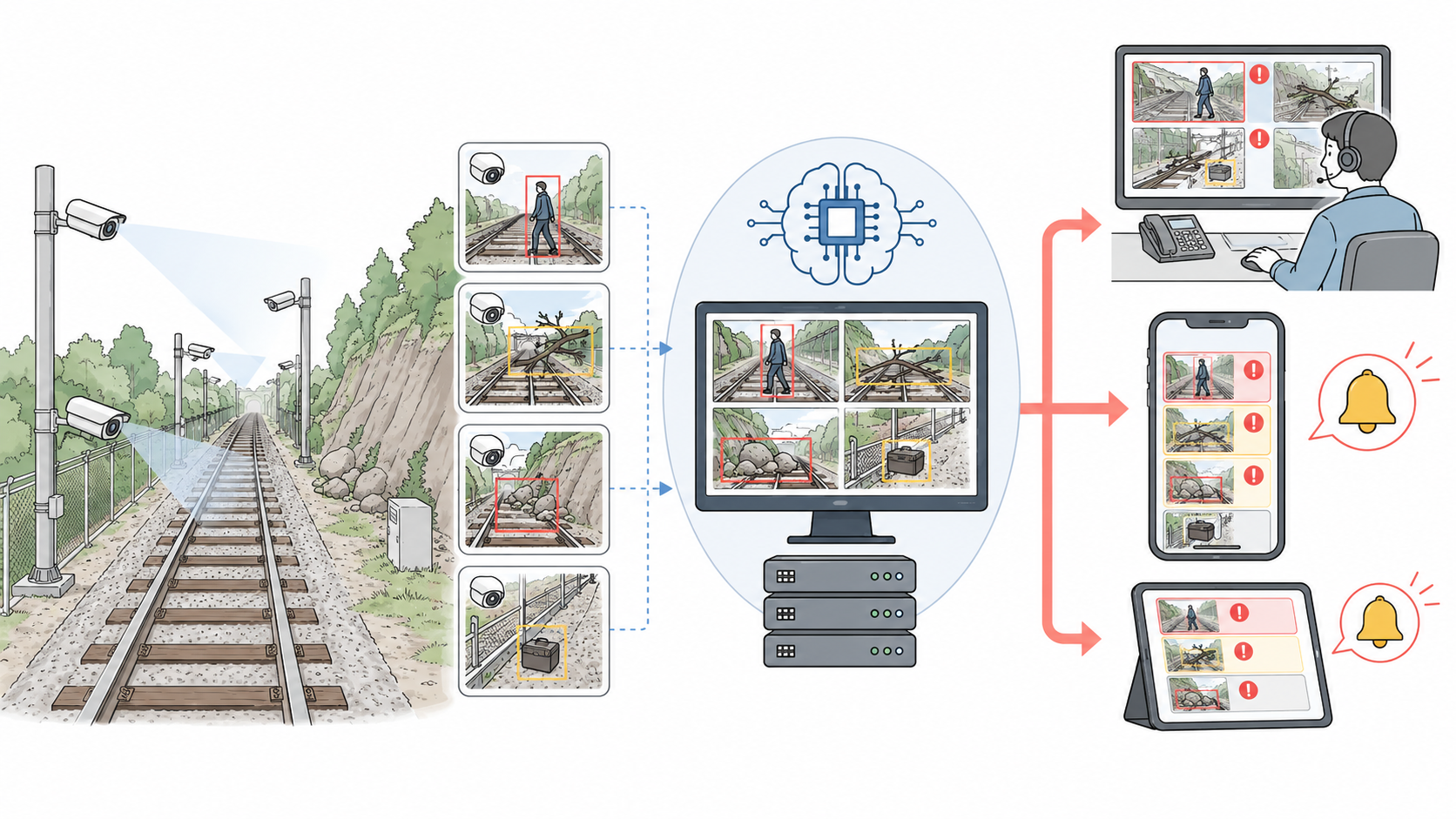
AI continuously analyzes footage from surveillance cameras installed along the tracks and in high-risk areas, detecting rockfalls, mudflows, intrusions by people or animals, and foreign objects on the tracks — promptly notifying stakeholders when anomalies occur. This eases the monitoring burden while improving the safety of railway operations.
Approach 3: Overhead Line & Auxiliary Equipment Inspection
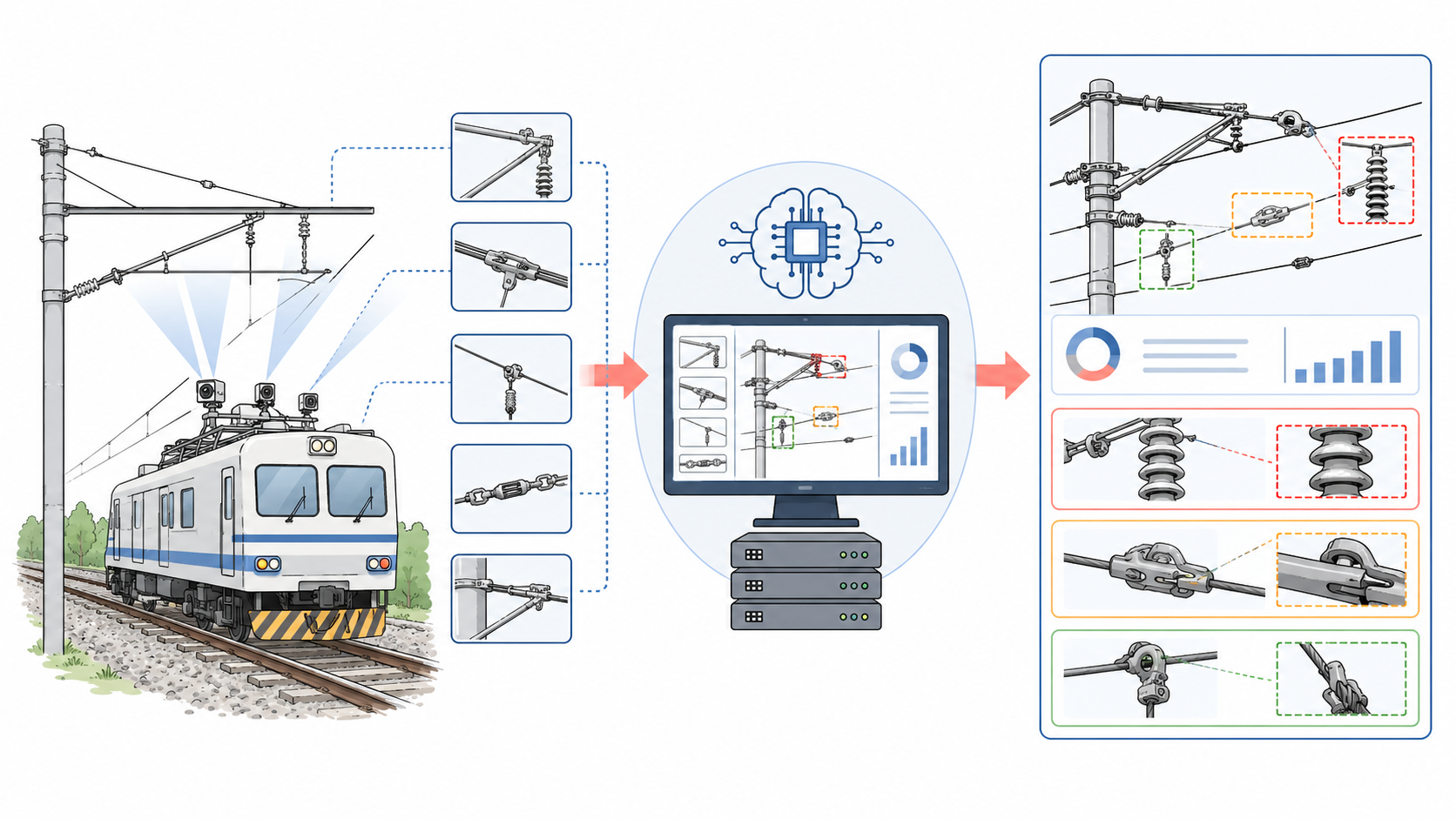
Cameras mounted on inspection vehicles capture overhead lines and auxiliary equipment, and AI detects anomalies such as wear, damage, deformation, and displacement. This makes inspecting equipment installed at height far more efficient, improving worker safety and advancing preventive maintenance.
Outcomes & Value — Toward Sustainable Railway Maintenance
AI does not replace human judgment — it supports the checks and decisions of field staff. By combining AI-based automatic detection with final confirmation by expert personnel, we contribute to safer, more efficient, and more sustainable railway infrastructure.
- Track inspection time reduced dramatically from roughly 10 hours to 2 hours per person
- Automatic anomaly extraction lowered the risk of missed defects and standardized inspection quality
- Model compression enabled real-time processing on field equipment
- Combined AI detection with expert final confirmation to build a sustainable maintenance regime
Facing a similar challenge? We'd love to hear from you.
Contact us